
The Best SEO Keyword Research Tools

Affiliate Disclosure: This post may contain affiliate links, and I will receive an affiliate commission, which I will then use to maintain this blog. I am offering bonuses to my readers when they purchase anything through my affiliates below. These include extra guides to grow your blogging business and much more!
Finding keywords to grow your blogging is the key to success however, all the bloggers we had issues with. Struggling with traffic is the biggest problem bloggers face in the early stages of their blogging journey. We are creating a content strategy to increase organic search traffic as content creators, but sometimes we need to revisit our topics. Finding long-tail keywords is a must to increase traffic, but having the best keyword tool to get more data and keyword search volume is essential.
Keyword research tools are very straightforward for specific long-tail keyword suggestions. Also, it gives you different ways to use data and find new keywords. A good keyword research tool is a must for growing your online presence and for keyword optimization guidance. You don’t really need a lot of experience in SEO to find the best tools for your SEO strategy or any additional features. Now, let’s dive into some of the best keyword research tools, both free and paid.
Google Keyword Planner
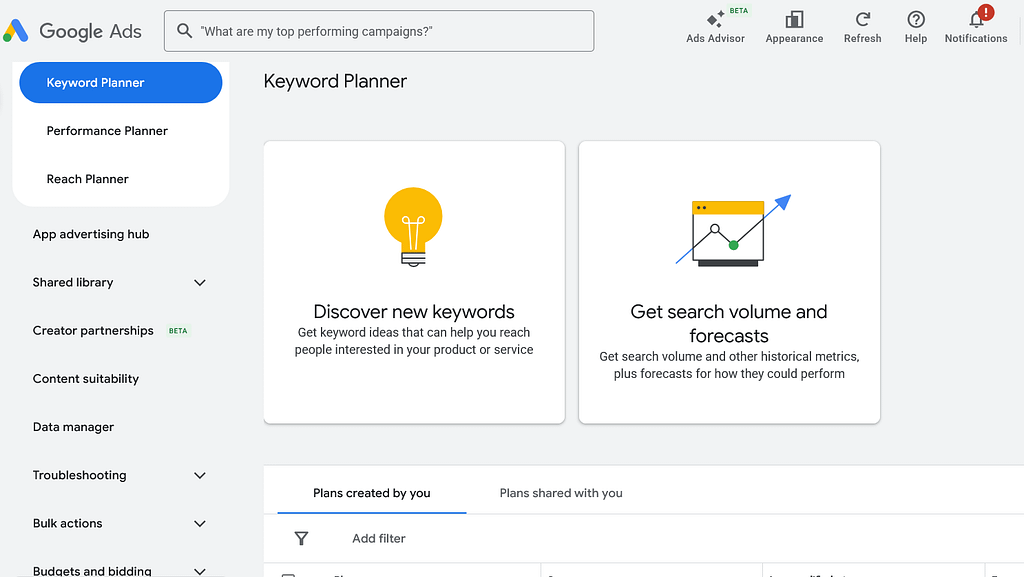
The Google Keyword Planner is free and good for advanced pay-per-click keyword lists, target keywords, and getting the best Google search results. You have a lot of data to use here: average monthly searches, Google Trends, and finding low SEO difficulty. Also, you can find specific long-tail keywords and easy-to-rank keywords, and see your ad impressions for any keyword you search. Check it out here!
Google Trends
This is the best tool for free searches to find topic ideas, target audiences, and competitor keywords. Google Trends lets you see what people are searching for and which topics they’re interested in. Of course, you can choose a country and search around the world. This tool understands search trends, making the keyword research process easier, and you can also check search volume over 8 years. Google Trends is an incredible free tool that can give you a lot of ideas for writing new articles. A lot of bloggers use to get the highest rankings. Check it out here!
Keyword Everywhere
Keyword Everywhere is another of the best SEO keyword research tools, with both a free and a paid version. It’s great because it gives you a lot of options, such as analysis of search volume, keyword competition data, and cost-per-click. I love this keyword tool because it gives you Google options straight away. You can install those in three different browsers: Edge, Firefox, and Chrome. Plus is a very affordable tool that displays results across platforms like YouTube and Google search engines, and provides data. Also, cost-effective pricing, so you do not have to worry about the budget. Now, a couple of things to remember: they had fewer features than other software. It is easy to use and a good start. Check it out here!
Ahrefs
I have never used Ahrefs, but other bloggers say it is good. They are actually very expensive, however, they give you a lot of popular keywords for content marketing. Ahrefs gives you a lot of related keywords, keyword ideas, and the right keywords, along with keyword search volume. You can have the best competitive analysis, content search, content ideas, and web monitoring. Now, the best reason why everyone is using it is the backlink information. A very good keyword research tool that gives you a lot of information on backlinks and the links you get or lose.
Link building is very important for increasing traffic and domain authority, and it also gives you great data on other platforms. It will give you over 3 billion relevant keywords, make it easy to find new keywords, and let you check your competition as well. Another advantage is that it lets you see how hard it is to rank for a specific keyword. The other great thing about this keyword tool is that it shows you every specific topic that ranks well, not only in organic search but also in social media. Ahrefs sends you alerts for any keywords related to your blog it also sends you a link to the page. Now, check out the article ” Ahrefs Beginners ‘ Guide to Keyword Research.
Moz Keyword Explorer
Moz is affordable, with a free plan, so you have time to try it out and see if it’s a good fit. It tells you the most relevant keywords, the monthly search volume, and how difficult it will be to rank in the top ten searches. Also, you can check organic search results, easy-to-rank keywords, and more features. Moz is giving you serp analysis and the keywords your website is ranking for.
Hook Recommendations
Moz built a tool that doesn’t just find keywords. It tells you which ones you can win. The keyword platform that treats ranking difficulty like a science, not a guess.
What Makes Moz’s Approach Unique
Priority score combines volume, difficulty, and CTR. Weighs multiple ranking factors into one metric that tells you exactly which keywords offer the best effort-to-reward ratio for your site.
Organic CTR data shows actual click potential: it displays how many clicks keywords generate. Based on SERP features like featured snippets and knowledge panels that steal traffic before users click.
SERP analysis breaks down ranking factors like examines page authority, domain authority, and on-page elements. For the top results, showing you exactly what Google rewards for each query.
Keyword suggestions group by lexical similarity: Organizes related terms based on shared words and concepts, making it easy to build tightly themed content clusters instead of scattered posts.
Custom keyword lists with performance tracking: save keywords into projects and monitor their difficulty. Also, opportunity and potential over time as your site authority grows.
Extra Golden Nuggets
The opportunity score reveals undervalued keywords: it identifies terms with high CTR potential and low competition, surfacing opportunities to capture disproportionate traffic quickly.
Domain authority aontext adjusts recommendations: factors in your site’s current authority to suggest keywords you can realistically rank for instead of showing impossible targets. SERP feature tracking shows content format wins: displays which SERP features appear for each keyword, guiding whether you need list posts, how-to, videos, or comparison tables to rank.
Closing Recommendations
Moz turns keyword selection from a volume game into a strategic science. When you need to know which keywords you can rank for, Moz answers that question. Check out the price plan here!
Ubersuggest
This is one of my favourite keyword research tools created by Neil Patel. Ubersuggest gives you a lot of keyword research, search volume data, and the SEO difficulty score. You can get a lot of content ideas, keyword data, insights into competitors’ websites, and much more. Ubersuggest does have a free version; however, it has very limited features. This keyword tool gives you long-tail keyword suggestions and the ranking percentages for any keyword. It will give you many ideas and additional information to rank higher on Google. Check out the rest here!
SEMrush
SEMrush offers a free plan and a paid plan that is a bit expensive, but you can also create a custom plan. Custom plans are for bloggers with one website, and you can add features to meet any specific needs you have. Like any other tool, it helps you find the right keywords for your target audience and related keywords. You can get all the information about cost per click, search volume, and other features. For some bloggers, it can be a complicated tool to use, but for others, it is different. SEMrush lets you track your domain authority and Google ranking. It sends you notifications when your rankings are falling and when the domain rankings are changing. Also, SEMrush detects errors, broken links, and more to help you rank higher in Google.
Hook Recommendations
SEMrush handles keyword research like a precision instrument, not a blunt hammer. Most keyword tools show you data. SEMrush shows you what to do with it.
What Makes This Tool Essential
Massive keyword database with 24 billion entries: covers search data from over 140 countries, giving you visibility into global and hyper-local opportunities most tools completely miss.
Keyword magic tool organizes chaos into clarity: groups related keywords into clusters automatically, letting you build topic authority instead of chasing random one-off terms.
Competitor keyword gap analysis built in: shows you exactly which keywords your competitors rank for that you don’t, turning rival sites into roadmaps for your content strategy.
Organic research reveals actual traffic numbers: estimates how much traffic competitors get from each keyword, so you know which terms drive visitors versus vanity metrics.
Search intent classification speeds up targeting: labels each keyword as informational, navigational, commercial, or transactional so that you can match content type to user intent instantly.
Extra Golden Nuggets
The position changes: track only keywords where your rankings moved up or down in the last week, letting you spot algorithm shifts and content decay before traffic crashes. Topic research tool builds content briefs automatically: enter a seed keyword and get headlines, questions, and related searches organized into content clusters that practically write your outline for you.
Keyword difficulty score, including SERP feature data: shows whether featured snippets, local packs, or knowledge panels dominate the results, revealing which keywords need different content formats to win.
Extra Recommendations
SEMrush turns keyword research from guesswork into a repeatable, scalable system. Stop chasing keywords unthinkingly. SEMrush shows you exactly where the traffic hides. Check out SEMrush!
RankIQ
The last one is my favourite because you can rank on Google within 3 months. Yes, that’s right, you will learn a completely different way to grow your blogging business easily. I love that Rankiq is giving you a content optimizer and the best keywords for your titles. Top ranking titles with all the competitors’ analysis for you to get many ideas. Plus, the best content ideas, keyword ideas, and content analysis for your blog posts to grow your blogging business. Check it out here!
Hook Recommendations
Rankiq handles content optimization within the tool, so you can write and see if it will rank high. You can add the relevant keywords from the keyword tool, and you will succeed.
What Makes This Tool Essential
The covers massive keyword data for every niche, and you can check, save the competition analysis, and see how hard it is to rank. I love these tool features because they let you find the exact number of keywords you need. You will rank high if you are following the instructions and other ranking factors to grow. The keyword optimization guidance is a lot of fun, and you have everything you need to increase your domain authority. Inside the tool, you can get reports, keyword library, and ranking audits for your blogging business. Check it out here!
Any Tool you use is always up to your business needs and wants. Plus, you will have to choose what is easier for you. All the keyword search tools are good, with different features that help us grow our target audience. Google is giving us bloggers a lot of traffic boosts, so keep writing. Leave your comments below and tell me your experiences.